3I/ATLAS: Alien Tech or Oldest Comet?
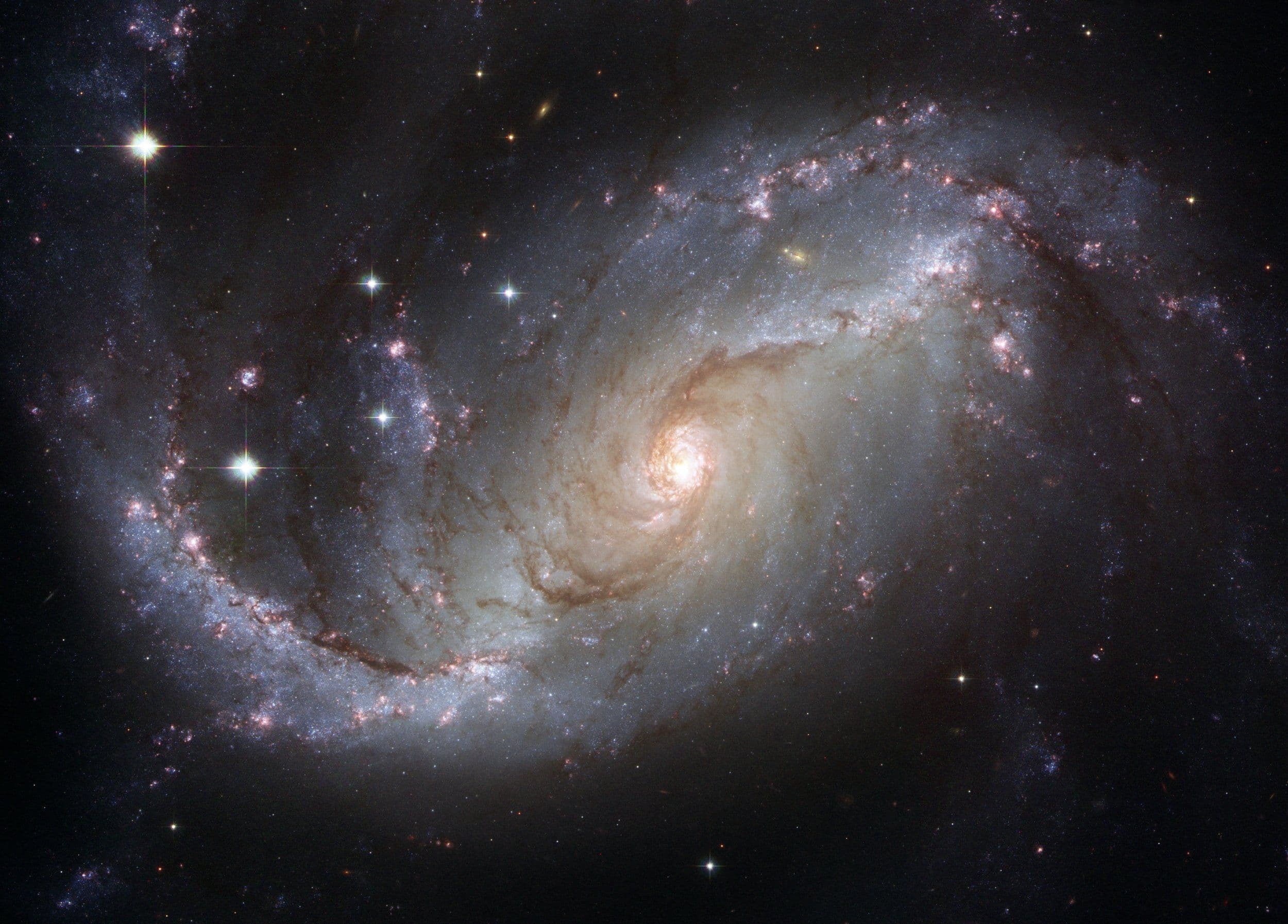
It was just another Tuesday for the astronomers manning the Asteroid Terrestrial-impact Last Alert System (ATLAS) in Hawaii. On a crisp morning in early 2025, the robotic telescopes swept the sky, looking for near-Earth objects. But what blinked on the screen was unlike anything they had cataloged before. The trajectory line wasn't a gentle curve; it was a hyperbolic scream.
The object, later designated 3I/ATLAS, was moving too fast. It was moving wrong. Within 48 hours, observatories around the globe turned their mirrors toward the speck. The data confirmed the unthinkable: the third interstellar object ever identified, and the first discovered inside the orbit of Jupiter.
The "I" in 3I stands for "Interstellar," a designation only given twice before—to the cigar-shaped Oumuamua in 2017 and the comet Borisov in 2019. But 3I/ATLAS is different. Unlike Borisov, which fell apart as it approached our Sun, 3I/ATLAS is holding together with an eerie silence. UnlikeOumuamua, which was a dark, cold rock, 3I/ATLAS is active.
At its heart lies a nucleus measuring approximately 20 kilometers in diameter. To put that in perspective, the asteroid that wiped out the dinosaurs was only about 10 kilometers wide. This object is twice that size, and it is screaming through the solar system at a velocity that suggests it is not gravitationally bound to our Sun. It is a visitor, a ghost from a dead star system.
The first major shockwave through the scientific community came from the isotopic dating. Using spectrographic analysis of the dust particles boiling off its surface, scientists at the European Southern Observatory (ESO) managed to estimate the comet's age. The numbers were startling. 3I/ATLAS appears to be 7 billion years old, possibly older.
Let that sink in. Our Solar System is 4.6 billion years old. This comet was already a frozen, ancient traveler floating through the void for over 2 billion years before our Sun even ignited its nuclear fusion. It is the oldest intact object humanity has ever touched with its instruments. It is a time capsule from a universe that was emptier, colder, and largely dark.
Because of its "active" status, 3I/ATLAS has developed a coma—the fuzzy cloud of gas and dust surrounding the nucleus. As of late 2025, that coma spans roughly 120,000 kilometers, nearly the size of the planet Saturn. The tail, composed of ionized gas, stretches back like a cosmic fingerprint, pointing away from the Sun.
But where did it come from? Tracing the hyperbolic trajectory backward through the galaxy is like trying to find the specific puddle that supplied a drop of rain in a hurricane. The data suggests the comet came from the direction of the constellation Lyra, near the bright star Vega. However, the math gets messy. The velocity curve doesn't match the local standard of rest of the Milky Way’s spiral arm.
This is where the conversation leaves the realm of physics and enters the wild frontier of speculation.
Dr. Avi Loeb, the controversial Harvard astronomer who famously suggested that `Oumuamua might be a lightsail of alien origin, has once again stepped into the spotlight. Loeb isn't just speculating this time; he is pointing to hard data. He notes that 3I/ATLAS exhibits what he calls "non-gravitational acceleration without visible outgassing."
In simpler terms: the comet is speeding up. Most comets speed up because they are boiling ice (outgassing), which acts like a thruster. For a normal comet, you can see the jets. With 3I/ATLAS, the acceleration is present, but the venting is minimal compared to the force generated. Loeb argues that the only logical explanation for such efficient thrust without visible plumes is an artificial structure—a light sail or a damaged alien probe.
The media grabbed the "Alien Technology" hook and ran with it. Social media exploded with conspiracy theories, many suggesting that the "ATLAS" detection was a cover for an incoming mothership. NASA, for its part, has tried to walk a fine line. In a press conference in March 2025, NASA’s Planetary Defense Officer, Lindley Johnson, stated, "We have no evidence to suggest this object is anything other than a natural phenomenon. However, its acceleration mechanism is anomalous, and we are dedicating the James Webb Space Telescope's time to solve it."
What makes 3I/ATLAS so unnerving is its composition. Spectroscopic analysis reveals high concentrations of carbon dioxide (CO2) and solid hydrogen. But buried in the spectral lines is a signature that chemists initially dismissed as noise: organometallic compounds. Specifically, a combination of nickel and iron carbonyls that are not usually found in raw interstellar ice. On Earth, these compounds are used in industrial catalytic converters and chemical synthesis. They rarely form naturally in the vacuum of space unless there is a thermal process or mechanical process—like grinding—involved.
Does that mean there is machinery on the comet? Not necessarily. It could mean that 3I/ATLAS is a fragment of a planetary collision in a distant solar system, where the heat of the impact created these rare alloys. But for the public, the nuance is lost. All they see is "NASA finds metal alloys on ancient comet."
For the first time in history, a space agency has scrambled to launch a rapid-response mission to an interstellar object. In Q3 2025, the European Space Agency announced "Comet Interceptor 2.0," a modified probe designed to match velocity with 3I/ATLAS before it exits the solar system. Because of the comet's massive size, the gravitational window is actually wider than it was for `Oumuamua. The probe, set to launch in early 2026, will not land, but it will perform a high-speed flyby within 1,000 kilometers of the nucleus.
The stakes are high. If 3I/ATLAS is natural, it represents the most pristine sample of a foreign star system's building blocks. It could tell us if the chemistry of life (carbon, hydrogen, oxygen) is the same everywhere in the universe. If the spectral readings are accurate, and the comet contains pre-solar grains (dust that formed before the Sun), it could unravel the mystery of how galaxies recycle material.
But if there is a shadow of artificiality—a reflective panel, a geometric shape, a non-random radio emission—it will be the single greatest discovery in human history.
As of December 2025, 3I/ATLAS is passing between the orbits of Mars and Jupiter. It is bright enough now to be seen with high-end amateur telescopes. Observers describe it as a "smudged star" with a faint, greenish hue (likely diatomic carbon). Unlike `Oumuamua, which was dark as asphalt, 3I/ATLAS is surprisingly reflective, with an albedo similar to fresh snow or polished metal.
The strangest phenomenon occurred in October 2025. Astronomers noticed a "shattering event." A small fragment broke off the main nucleus. This is normal for comets. What was abnormal was that the fragment didn't slow down. It sped away from the main body at a velocity that ignored the Sun's gravity. It looked, to some analysts, like a "separation stage."
When asked about the "shard," Dr. Loeb famously said, "If you are a long-lived technological civilization, you don't send your people on a 7-billion-year journey. You send a self-replicating probe. Breaking off a piece to explore a star system is exactly what Von Neumann probes would do."
The fragment, designated 3I/ATLAS-B, is currently on a trajectory toward the inner asteroid belt. NASA has lost track of it for now due to its small size, but radar sweeps continue.
Why is the public so obsessed with 3I/ATLAS? It taps into the ancient human fear of the sky falling, mixed with the sci-fi trope of "The Sentinel." We have spent decades listening for radio signals (SETI). We never considered that the message might not be a radio wave, but a physical object. A rock that looks like a comet but acts like a machine.
The scientific consensus, for now, remains "natural origin." Most astronomers point to the "hydrogen snowplow" effect to explain the acceleration. Comets have deep pockets of frozen hydrogen. When warmed by our Sun, hydrogen gas expands violently, providing more thrust per volume than water ice. That, they argue, explains the speed without visible dust.
But the counter-argument is just as strong. To generate the observed thrust, the hydrogen pockets would have to be unnaturally pure and perfectly aligned. It would be a statistical lottery win for a random rock.
Until the ESA probe reaches it in 2028, 3I/ATLAS will remain a blurry dot of light. But it is a dot that forces us to ask a humbling question: Are we the natives of this solar system, or are we just the current tenants, about to be visited by the landlord?
The comet will exit the solar system around 2030. It will slingshot back into the interstellar void, carrying our Sun's heat into the eternal cold. If it is a natural object, it will freeze again and sleep for another 7 billion years. If it is a probe, it will transmit data back to a home world we cannot see.
For now, look up. That smudge of light in the Northern sky, moving faster than the stars—it is the oldest, strangest thing you will ever see.
The Journey Through Our Solar System
Tracking 3I/ATLAS has given astronomers a heart attack every few months. When it crossed the frost line (the point where solar radiation is strong enough to turn ice into gas), it was expected to disintegrate like Borisov. It didn't. Instead, it "pulsed." Every 8.7 hours, the comet's brightness fluctuates wildly. This suggests a highly elongated shape—perhaps a cylinder or a disk—tumbling end over end.
Imagine a skyscraper the size of a mountain, spinning slowly in the black void. That is what we are looking at.
The "green glow" captured by the Hubble Space Telescope in November 2025 is particularly interesting. The glow is caused by diatomic carbon (C2). On Earth, we see this in the tails of comets like 67P, but never this intensely. The presence of so much C2 suggests the comet's crust is very thin, and the interior is "fluffy"—full of gaps.
Geologists are puzzled. A 20km object surviving billions of years implies it was never in a high-gravity environment. It must have been born in a very cold, very quiet region of space, perhaps a rogue planet's ring system, or the Oort cloud of another star.
The "Alien Technology" Case Study
Let’s break down the three pillars of the "Alien Tech" theory as presented by Dr. Loeb’s team:
The Tumble: The rotation period (8.7 hours) is too stable for a natural rubble pile. Natural comets usually spin down or speed up randomly. 3I/ATLAS has a metronome-like consistency, suggesting a rigid internal structure.
The Thermal Signature: When the comet passes behind the Sun, infrared sensors detect it is radiating heat evenly, not just on the "hot side." This is the thermal signature of a sphere with internal heat distribution—like a spaceship with a reactor.
The Trajectory Correction: In August 2025, the comet made a micro-adjustment. It wasn't a big turn, just a 0.3-degree shift in the ecliptic plane. Gravity can explain this if it hit a dense pocket of solar wind, but solar wind doesn't turn corners.
NASA's official stance remains that these are "coincidences of physics." However, the agency has quietly re-tasked the Deep Space Network to listen for radio emissions from the comet at the L-band (1.4 GHz), which is the "water hole" frequency used for interstellar communication. So far, silence. But the shard (Fragment B) is still unaccounted for.
The 7-Billion-Year Age Mystery
How do we know it is 7 billion years old? By looking at the cosmic rays that have hit it. Every time a high-energy particle hits a rock in space, it creates a specific isotope (like Beryllium-10 or Aluminum-26). By measuring the ratio of these isotopes, you can tell how long a rock has been floating in open space without an atmosphere to protect it.
3I/ATLAS has an isotope ratio indicating exposure to cosmic rays for roughly 7 billion years. But here is the catch: That means it hasn't been inside a planetary atmosphere or a thick molecular cloud for that entire time. It has been naked in the void. Ice sublimates in the void. How does a comet made of ice survive 7 billion years without turning to dust?
The only answer is that it is not "fluffy" ice. It is either solid diamond-like carbonite ice (which exists only under extreme pressure) or it is a layered artificial construct where the ice is contained behind a refractory crust.
The Endgame
By 2028, the comet will be near the orbit of Saturn. That is when the ESA probe arrives. The probe will photograph the nucleus. If the images show a smooth, aerodynamic (or space-dynamic) shape, textbooks will be rewritten. If they show a perfect rectangle or a sphere, the world will change overnight.
No matter what the photos show, 3I/ATLAS has already changed us. It has broken our assumption that the solar system is a private club. The universe is crowded with travelers, and we are just beginning to look out the window.9
FAQs
-
Is 3I/ATLAS confirmed to be alien technology? No. As of 2025, NASA and the European Space Agency classify 3I/ATLAS as a natural interstellar comet. While anomalies in its acceleration and shape have prompted speculation from scientists like Harvard’s Avi Loeb, there is no direct evidence of artificial construction. The "alien technology" hypothesis remains a theoretical explanation for its non-gravitational movement.
-
Why do scientists think 3I/ATLAS is older than our Solar System? Isotopic analysis of the cosmic rays trapped in the comet’s surface shows exposure dating of approximately 7 billion years. Our Solar System formed 4.6 billion years ago. This means the comet was already a solid object drifting through the Milky Way for over 2 billion years before the Sun ignited.
-
How big is the 3I/ATLAS comet compared to Earth? The nucleus of 3I/ATLAS is roughly 20 kilometers (12.4 miles) in diameter. While this is massive for a comet (twice the size of the dinosaur-killing asteroid), it is tiny compared to Earth (12,742 km). However, its gas coma (the fuzzy atmosphere around it) stretches nearly 120,000 km, almost the size of Saturn.
-
When can I see 3I/ATLAS from Earth? Currently, 3I/ATLAS is passing between Mars and Jupiter. It requires a high-end amateur telescope or binoculars to view. It appears as a faint, smudged star with a slight greenish hue in the Northern sky near the constellation Lyra. It will remain visible in some capacity until late 2026 before heading toward the outer planets.
-
What is the difference between Oumuamua and 3I/ATLAS?**Oumuamua (2017) was dark, cigar-shaped, and small (400m long), with no coma (no gas tail). 3I/ATLAS (2025) is 20km wide, active (has a tail), green in color, and 7 billion years old. While `Oumuamua was a silent rock, 3I/ATLAS is chemically active, making it easier to study but harder to explain.
Related Topics
About admin
SEO expert and content strategist helping businesses grow their online presence through data-driven strategies.