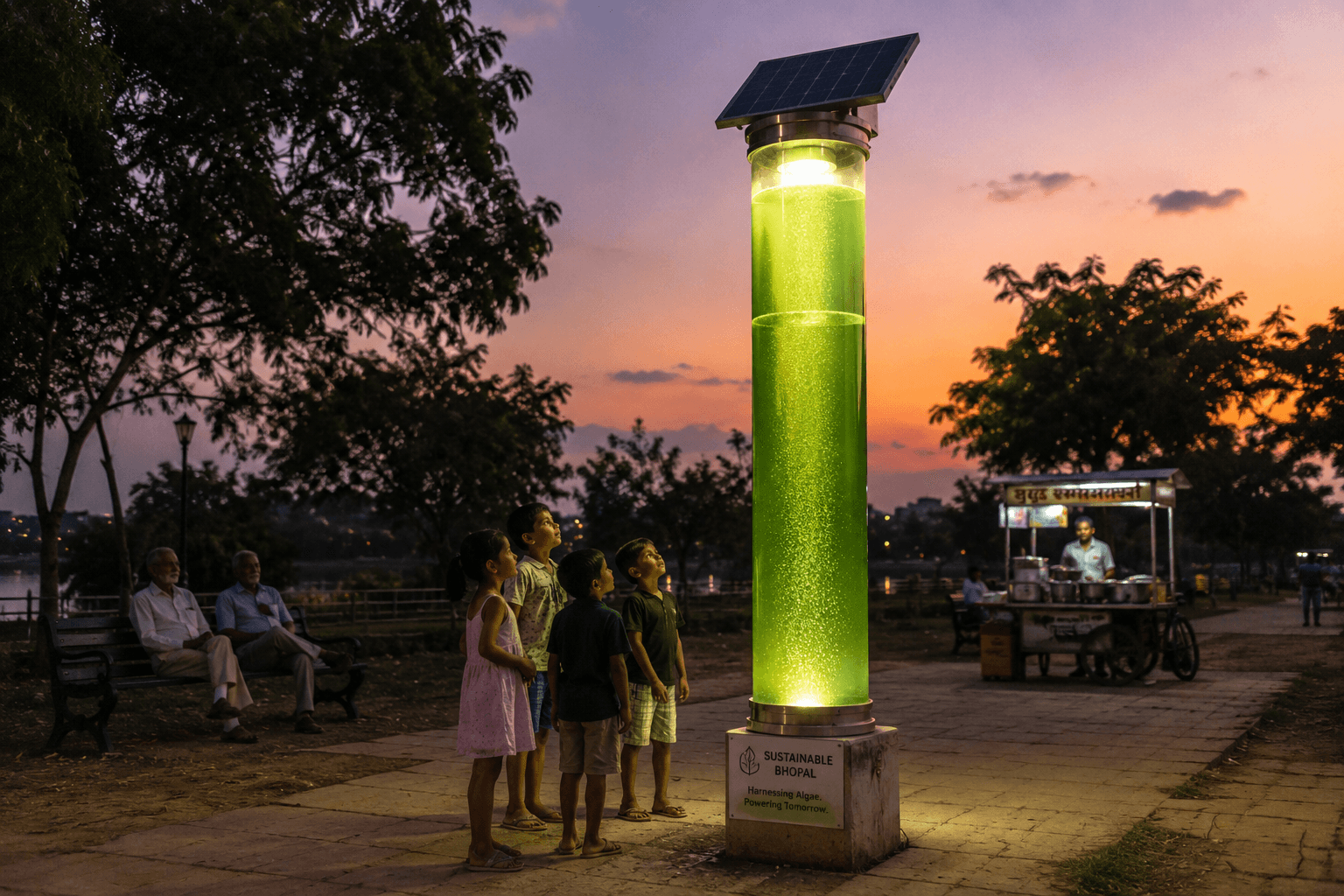
Algae Tree: Natural Oxygen Technology for Cleaner Air

Algae Tree: Natural Oxygen Technology for Cleaner Air
Algae Tree is a new environmental technology designed to use algae for the production of natural oxygen in the atmosphere. It is built around the idea that algae can absorb carbon dioxide and release oxygen through photosynthesis, creating a living system that supports cleaner air. The concept of Algae Tree combines biology, climate technology, and urban sustainability in one solution. It is considered a modern green innovation because it works as an artificial or engineered structure that imitates the oxygen-producing role of trees while using algae as the active living component.
The core function of Algae Tree is based on the natural process of algae growth and gas exchange. Algae take in carbon dioxide from the surrounding environment and convert it into oxygen through light-driven biological activity. Because algae grow quickly and can be placed in controlled systems, they are often seen as a practical option for environmental applications. In an Algae Tree system, this process is used to help improve air quality in cities, public spaces, and polluted environments. The technology is often discussed as a possible supplement to traditional green cover in places where planting large numbers of trees is difficult.
Algae Tree technology is linked to the broader field of climate-tech and clean-air innovation. Urban areas with high traffic, dense buildings, and limited open land often face serious air pollution problems. In such environments, natural trees alone may not be enough to meet the demand for oxygen production and carbon absorption. Algae-based systems are being explored because they can operate in compact spaces and may provide a measurable contribution to oxygen generation. This makes Algae Tree an important topic in discussions about future environmental infrastructure.
The design of an Algae Tree can vary depending on the model and purpose. Some versions are built as vertical structures, while others are designed as standalone installations that integrate water, light, and algae cultivation units. The system usually includes a controlled environment that helps algae survive and function efficiently. Light exposure, water circulation, nutrient balance, and carbon dioxide intake are all important parts of the process. Because of this, Algae Tree is not just a visual green structure but also a living biological system with environmental output.
One of the most discussed features of Algae Tree is its potential to generate oxygen in a concentrated and measurable way. Since algae are highly efficient at photosynthesis, they can produce oxygen faster than many land-based plants under suitable conditions. This makes algae attractive for environmental technologies that aim to improve air quality. The oxygen produced by algae is a direct result of carbon dioxide conversion, which also helps lower greenhouse gas levels in the surrounding area. This dual function is one of the reasons Algae Tree has gained attention in sustainability conversations.
Another important aspect of Algae Tree is carbon dioxide absorption. Carbon dioxide is one of the main gases associated with climate change, and technologies that reduce its concentration are increasingly valuable. Algae use carbon dioxide as part of their growth process, which means they can help remove it from the air while generating oxygen. In an urban pollution context, this makes Algae Tree relevant to environmental remediation, carbon management, and air purification strategies. The concept fits well into modern climate action goals because it supports both atmospheric cleansing and renewable biological output.
Algae Tree also represents the growing interest in biomimicry and nature-based technology. Biomimicry is the practice of designing systems inspired by nature’s own solutions. In this case, the idea is to replicate and improve the environmental function of a tree through a controlled algae-based structure. Traditional trees are essential for ecosystems, but they require land, time, and long-term maintenance. Algae Tree technology offers a different approach by using a fast-growing organism that can be placed where space is limited. This gives the concept strong value in cities, transport zones, commercial areas, and other built environments.
The use of algae for oxygen production is especially important in areas that suffer from rising pollution levels. Cities with poor air quality often need immediate interventions that can work alongside long-term tree plantation programs. Algae Tree can be viewed as one of those interventions because it is designed to work in urban settings where natural green space is not enough. Its presence in public areas can also help raise awareness about environmental science, clean-air solutions, and the role of biological systems in climate management. As a result, Algae Tree is both a functional technology and an educational symbol of green innovation.
The technology behind Algae Tree is closely connected to research in bioengineering and sustainable design. Scientists and innovators are interested in how living systems can be integrated into everyday infrastructure to produce measurable environmental benefits. Algae cultivation systems are already used in multiple sectors, including biotechnology, food science, energy research, and wastewater treatment. Algae Tree brings those ideas into the public environment by focusing on air purification and oxygen generation. This broad applicability is one reason why the topic is gaining search interest online.
Algae Tree is also associated with the future of smart cities. Smart cities are urban areas that use technology to improve quality of life, resource management, and environmental performance. An algae-based oxygen system fits naturally into this vision because it supports cleaner air, efficient land use, and sustainable urban design. It can be placed in environments where people gather, work, or travel, creating a visible reminder of ecological technology in action. The system’s value lies not only in function but also in its ability to represent a modern response to environmental challenges.
The idea of producing natural oxygen through algae is scientifically aligned with basic photosynthesis principles. During photosynthesis, algae use light energy to turn carbon dioxide and water into biomass and oxygen. This process is central to life on Earth and is one of the most important mechanisms for maintaining atmospheric balance. In an engineered system like Algae Tree, this natural function is organized and enhanced for environmental benefit. The concept shows how biological processes can be used in practical technology to support sustainability goals.
Algae Tree has also become a topic of interest because it combines environmental impact with innovation branding. The name itself is easy to remember and connects directly to the idea of green technology. In search results, this type of phrase often attracts users looking for information about oxygen-producing systems, sustainable infrastructure, urban pollution solutions, and climate-friendly technologies. Because the term is distinct, it has strong potential as a topical keyword in SEO content. Search interest can grow around its meaning, its function, and its relevance to clean air production.
The environmental importance of Algae Tree is tied to the larger need for alternative air-cleaning systems. As cities continue to expand, the pressure on natural ecosystems also grows. Traditional trees remain essential, but they cannot always be deployed quickly or densely enough in highly built-up zones. Algae Tree provides a complementary model that uses living organisms in a controlled structure to help address this gap. It does not replace forests or urban planting, but it offers a new way to think about oxygen generation in compact spaces.
In addition to oxygen production, algae systems may also support broader ecological benefits depending on how they are designed. They can contribute to carbon capture, pollution control, and public awareness of sustainable technologies. This makes Algae Tree relevant not only to environmental engineers but also to policymakers, urban planners, researchers, and climate innovation advocates. The technology sits at the intersection of biology and urban design, making it a useful example of how science can be translated into visible public solutions.
As climate change and air pollution remain major global concerns, technologies like Algae Tree are likely to receive more attention. Their value lies in offering a biologically active, space-efficient, and modern approach to environmental improvement. The idea of using algae to create natural oxygen in the environment reflects a shift toward systems that work with nature rather than against it. That is why Algae Tree is increasingly discussed as part of the future of clean-air technology and sustainable urban living.
Frequently Asked Questions What is Algae Tree? Algae Tree is a new technology that uses algae to produce natural oxygen and help absorb carbon dioxide from the environment.
How does Algae Tree produce oxygen? It works through photosynthesis, where algae use light, water, and carbon dioxide to generate oxygen and biomass.
Why is Algae Tree important for cities? It is important because it can support cleaner air in urban areas where space for traditional trees is limited.
Does Algae Tree replace real trees? No, it is a complementary technology that supports environmental improvement alongside natural green cover.
What makes Algae Tree a green technology? It uses a living biological process to improve air quality, reduce carbon dioxide, and support sustainability.
Is Algae Tree related to climate tech? Yes, it is part of climate-tech because it focuses on environmental repair, carbon absorption, and oxygen generation.
Why is Algae Tree trending in searches? It is trending because people are searching for new pollution-control solutions, oxygen-producing technologies, and sustainable urban innovations.
Related Topics
About admin
SEO expert and content strategist helping businesses grow their online presence through data-driven strategies.